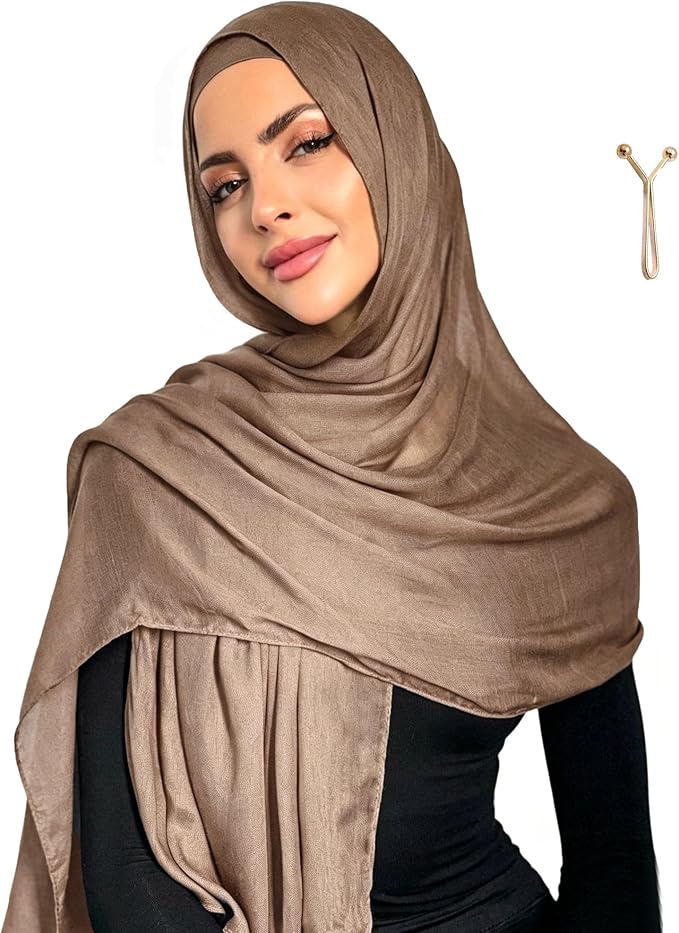
Choosing a hijab color becomes easier when you stop trying to find an exact match. Tonal combinations, gentle contrast and repeated undertones usually create a more sophisticated result than pairing identical shades from head to toe.
Espresso and warm ivory
This high-contrast neutral pairing feels softer than black and white. Wear an espresso hijab with an ivory dress or reverse the combination with a cocoa outfit and cream scarf. Gold jewelry and tan leather accessories keep the palette warm.
Olive and oatmeal
Muted olive behaves almost like a neutral and works especially well with oatmeal, stone and camel. Choose a matte modal or cotton hijab for daytime outfits. For a dressier look, use an olive satin scarf with a fluid beige abaya.
Dusty blue and taupe
Dusty blue adds quiet color without becoming overly bright. A taupe hijab grounds a blue dress, while a muted blue scarf refreshes a taupe trench or knit set. Silver accessories make the pairing cooler; brushed gold adds warmth.
Terracotta and soft beige
Terracotta brings depth to a neutral wardrobe and photographs beautifully in natural light. Pair it with sand, cream or light camel. If the outfit already contains a strong rust tone, select a beige hijab with a similar warm undertone rather than adding more color.
A scarf does not need to match the outfit. It needs to belong to the same color story.
Plum and mushroom
For autumn and evening outfits, deep plum offers a refined alternative to burgundy. Mushroom—a gray-beige neutral—softens its richness. This pairing works particularly well with black shoes or a dark chocolate bag.
How to build your personal palette
Begin with the colors already repeated in your wardrobe. Select three everyday hijabs that are slightly lighter or darker than your most-worn clothes, two gentle contrast colors and one deeper occasion shade. Photograph each successful combination in daylight and save the image on your phone. Over time, you will create a personal reference library.
Five dependable rules
- Match undertones: warm with warm, cool with cool.
- Use tonal variation instead of searching for an identical color.
- Repeat one shade through a bag, shoe or small print.
- Keep the scarf simple when the dress has a detailed pattern.
- Test colors beside your face in natural daylight.
Color is most useful when it makes dressing easier. A small collection of intentional shades will create more outfits than a drawer full of scarves that do not connect to the rest of your wardrobe.